
| The New York Optimist July 2008, Vol. 01: Issue 01 |
What do you do when you reach the point of saturation? When the delicate balance leans precariously towards
critical mass? There have always been more artists than collectors of art, a fact which has lent itself to the
competitive atmosphere of the art world, and why the term “starving artist” exists. The industry is churning
out more and more “professional artists”—more MFA grads supposedly worthy of exposure--as it continually
seeks out the “new” in line with the trends of sensationalism and shock value. Like all other commodities,
artists are becoming disposable, much like the society around us—more, cheaper, replaceable. The art world
has embraced this evolution, encouraging novelty to replace talent in many cases. As a result, it seems many
careers in the field are being curtailed, regardless of developing talent, giving way in favor to the next new
thing, making it harder and harder to follow any one emerging artist’s career, as quantity is exponentially
replacing quality as the norm. To further this trend, the international artist market is booming as well. Look
for example at the recent influx of Chinese contemporary artists to the scene, or more recently, artists from
India. If all countries are producing more artists, or the market is welcoming and promoting international
diversity—again for the sake of “different” and “novel”—we find ourselves awhirl in a sea of countless
emerging artists. How is one to keep track of the vast number of artists coming onto the scene daily, to follow
individual careers? The galleries seem so intent on finding the next great trend that the artists seem to fall
through the cracks immediately if they do not succeed in showing their mettle in their first show, as there is
always another to replace them, eager for their shot at their own infamous fifteen. And there is by no means
any lack of talent, but this also means an equal—if not greater—amount of lack thereof. But who is to say
what passes these days? The gallerists, who, at the end of the day, have only their convictions and knowledge
to go on. And whose work they actually come upon. Just imagine the hundreds or thousands of portfolios
that must arrive at galleries on a regular basis in hopes of standing out from the others, with the hopes of
procuring a show. Show me any gallerist who isn’t currently too busy with their current stable of artists to
take the time to give all these portfolios the time and attention they may potentially deserve. It is a difficult
situation for everyone, and it is for this that the MFA programs become so valuable. It serves as a certain
weeding-out process providing a venue with “greater talent” than that of the masses: a certain cream-of-the-
crop of artists, if you will. By having this universal standard, supposedly talent becomes something that can be
learned and earned, in the form of an MFA degree, and conversely, lack thereof indicates a lesser talent. Has
this world gone completely crazy?!? I know we totally capitalized on Outsider Art already, but who will step
up and tout the non-MFAers as their own breed, with their own virtues and uniqueness, sort of the semi-self-
made artist, as opposed to the full-fledged, mainstream, by-the-books, bona fide, certified Artistes? When did
talent become a manufacturable commodity? Is talent not an innate attribute which cannot be conferred by
another? I understand a certain amount of guidance is encouraged—think mentorship-apprenticeship of old,
but that was largely to gain the skills of the materials (operative word, skill). Today I feel I could better get
away putting an uncarved block of stone in a gallery and addressing its potential rather than actually carving the
damn thing. How many masterfully carved stone sculptures do we see nowadays in Chelsea galleries?
Conversely, how many found, un-manipulated objects (i.e. bras hooks or yoga mats or broken aluminum step-
ladders) straight out of dumpsters do we come across? It is clear that technical skill has largely been replaced
by something else, something far more convenient, something enabling far greater numbers to claim artistry. It
seems that lowering the standards of quality is a good thing. If no one can definitively claim what is “good”
then everything is fair play, and everyone in that game wins. Is this acceptable? I almost get the feeling we’re
aspiring to the lowest common denominator in many cases, and I find that unacceptable and will fight the good
fight until we see a backlash, a return—nay!—an evolution into the new quality and skill and aesthetic of the
Visual Arts.
critical mass? There have always been more artists than collectors of art, a fact which has lent itself to the
competitive atmosphere of the art world, and why the term “starving artist” exists. The industry is churning
out more and more “professional artists”—more MFA grads supposedly worthy of exposure--as it continually
seeks out the “new” in line with the trends of sensationalism and shock value. Like all other commodities,
artists are becoming disposable, much like the society around us—more, cheaper, replaceable. The art world
has embraced this evolution, encouraging novelty to replace talent in many cases. As a result, it seems many
careers in the field are being curtailed, regardless of developing talent, giving way in favor to the next new
thing, making it harder and harder to follow any one emerging artist’s career, as quantity is exponentially
replacing quality as the norm. To further this trend, the international artist market is booming as well. Look
for example at the recent influx of Chinese contemporary artists to the scene, or more recently, artists from
India. If all countries are producing more artists, or the market is welcoming and promoting international
diversity—again for the sake of “different” and “novel”—we find ourselves awhirl in a sea of countless
emerging artists. How is one to keep track of the vast number of artists coming onto the scene daily, to follow
individual careers? The galleries seem so intent on finding the next great trend that the artists seem to fall
through the cracks immediately if they do not succeed in showing their mettle in their first show, as there is
always another to replace them, eager for their shot at their own infamous fifteen. And there is by no means
any lack of talent, but this also means an equal—if not greater—amount of lack thereof. But who is to say
what passes these days? The gallerists, who, at the end of the day, have only their convictions and knowledge
to go on. And whose work they actually come upon. Just imagine the hundreds or thousands of portfolios
that must arrive at galleries on a regular basis in hopes of standing out from the others, with the hopes of
procuring a show. Show me any gallerist who isn’t currently too busy with their current stable of artists to
take the time to give all these portfolios the time and attention they may potentially deserve. It is a difficult
situation for everyone, and it is for this that the MFA programs become so valuable. It serves as a certain
weeding-out process providing a venue with “greater talent” than that of the masses: a certain cream-of-the-
crop of artists, if you will. By having this universal standard, supposedly talent becomes something that can be
learned and earned, in the form of an MFA degree, and conversely, lack thereof indicates a lesser talent. Has
this world gone completely crazy?!? I know we totally capitalized on Outsider Art already, but who will step
up and tout the non-MFAers as their own breed, with their own virtues and uniqueness, sort of the semi-self-
made artist, as opposed to the full-fledged, mainstream, by-the-books, bona fide, certified Artistes? When did
talent become a manufacturable commodity? Is talent not an innate attribute which cannot be conferred by
another? I understand a certain amount of guidance is encouraged—think mentorship-apprenticeship of old,
but that was largely to gain the skills of the materials (operative word, skill). Today I feel I could better get
away putting an uncarved block of stone in a gallery and addressing its potential rather than actually carving the
damn thing. How many masterfully carved stone sculptures do we see nowadays in Chelsea galleries?
Conversely, how many found, un-manipulated objects (i.e. bras hooks or yoga mats or broken aluminum step-
ladders) straight out of dumpsters do we come across? It is clear that technical skill has largely been replaced
by something else, something far more convenient, something enabling far greater numbers to claim artistry. It
seems that lowering the standards of quality is a good thing. If no one can definitively claim what is “good”
then everything is fair play, and everyone in that game wins. Is this acceptable? I almost get the feeling we’re
aspiring to the lowest common denominator in many cases, and I find that unacceptable and will fight the good
fight until we see a backlash, a return—nay!—an evolution into the new quality and skill and aesthetic of the
Visual Arts.
| July 10th Art Crawl By Stephan Fowlkes |
| Enough for now…on to my top five openings for the week (south to north)… 1. “…an exhibition of art and objects that reference the aesthetics, material culture, and traditional gestures surrounding death and remembrance.” “If I Could Have Saved You, We Would Have Lived Forever” curated by Becky Smith Bellwether 134 Tenth Avenue between 18th and 19th Streets Through August 8th, 2008 |


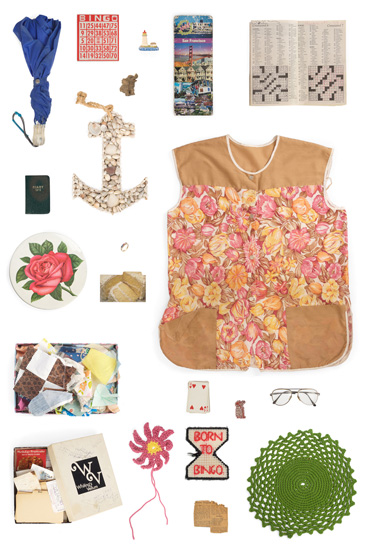
| Funeral |
| My Inheritance |
| 2. “…an exhibition of drawings by seventeen artists who set up various processes of fragmentation and erosion of information. Close attention is given to execution, a concentration on the production process itself.” “Microwave Six” 529 W. 20th Street Through September 13th, 2008 |


| Stephen Eichhorn, Fall Leaf Burst, 2008, Handcut collage on paper, 10 x 7.75 inches (12.75 x 10.75 inches framed) |

| Alexandra Grant, Contender (after Michael Joyce's "Contend", 2004), 2005, Mixed media on paper 126 x 80 inches |
| 3. “The exhibition explores the concept of the good life from a myriad of perspectives” including works by Tina Barney, Eve Sussman, and Diane Arbus, among others. “The Good Life” Yancey Richardson Gallery 535 W. 22nd Street Through August 22nd, 2008 |


4. “The physics of the natural world
rhyme with those in the emotional; the
more potential energy stored in a rock at
the top of a cliff, the more kinetic energy
will be released when pushed off. In art,
when employed effectively, this
relationship activates the viewing
experience the same way a piston activates
an automobile or a love scene activates one’
s emotions. The artists in the “Tension/
Release” exhibition harness this unsprung
potential with work that appears stable for
the moment, but threatens to collapse into
disorder, either literally or metaphorically.”
curated by Shane McAdams
Caren Golden Fine Art
539 W. 23rd Street
Through August 8th, 2008
rhyme with those in the emotional; the
more potential energy stored in a rock at
the top of a cliff, the more kinetic energy
will be released when pushed off. In art,
when employed effectively, this
relationship activates the viewing
experience the same way a piston activates
an automobile or a love scene activates one’
s emotions. The artists in the “Tension/
Release” exhibition harness this unsprung
potential with work that appears stable for
the moment, but threatens to collapse into
disorder, either literally or metaphorically.”
curated by Shane McAdams
Caren Golden Fine Art
539 W. 23rd Street
Through August 8th, 2008

| Nathan Redwood Neighbor 2008 acrylic on paper 40 x 32 inches |

| Javier Piñón Untitled 2008 collage on paper 36 x 26 (framed) |
5. “…an exhibition of major paintings, sculptures and works on paper that characterize a decade when New York was the center of a new art world.” Works by Basquiat, Koons, Scharf, Schnabel, Stella, Warhol and others. “Totally Rad: New York in the 80s” Paul Kasmin Gallery 293 Tenth Avenue Through September 6th, 2008 |

| Keith Haring Self Portrait, 1989 painted aluminum 48 x 27.5 x 33 inches 121.9 x 69.9 x 83.8 cm PK 12037 |

| Robert Longo Study for We Want God, 1984 acrylic and pencil on paper 14 1/2 x 15 inches 36.8 x 38.1 cm PK 12078 |

 |  |  |  |  |  |  |  |  |  |  |  |