| The New York Optimist |
 |  |  |  |  |  |  |  |  |  |  |  |


| © MMIX, The New York Optimist. All Rights Reserved. The New York Optimist & www.thenewyorkoptimist.com is a registered trademark of The New York Optimist. The New York Optimist is a registered service mark of Thenewyorkoptimist.com. The New York Optimist logo and original photos are a registered trademark of The New York Optimist . All other photos are property of the advertiser. And are rightfully protected under their copyright protections. |


SHARE
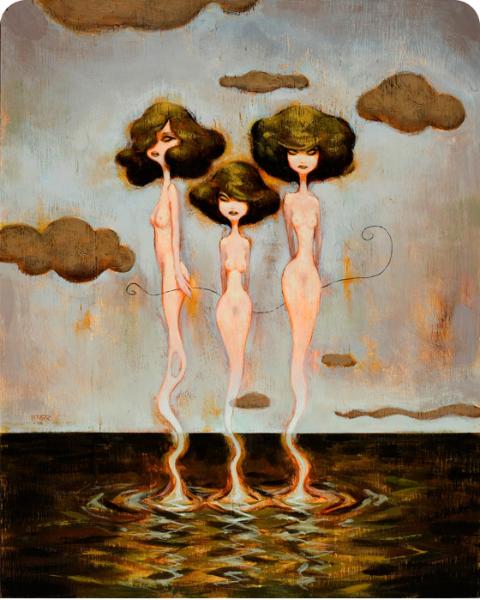
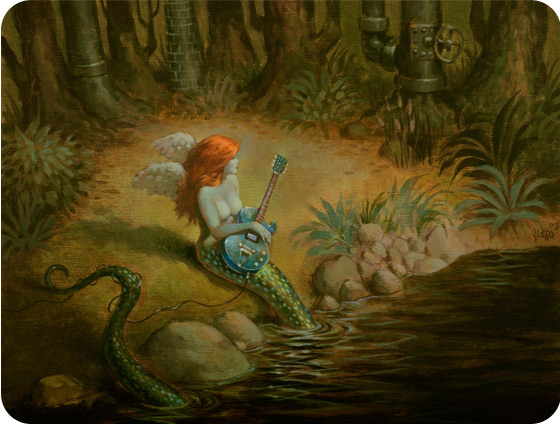
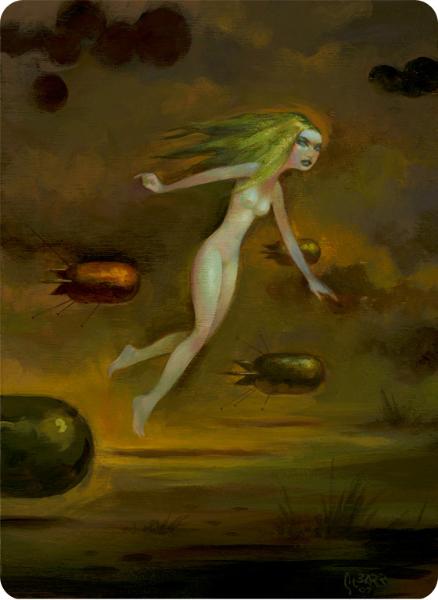
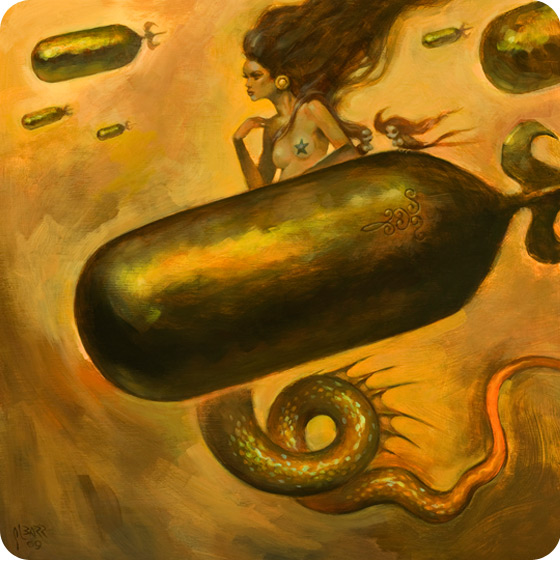
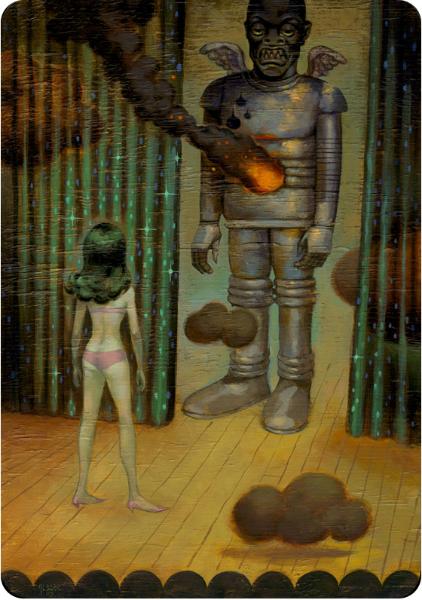
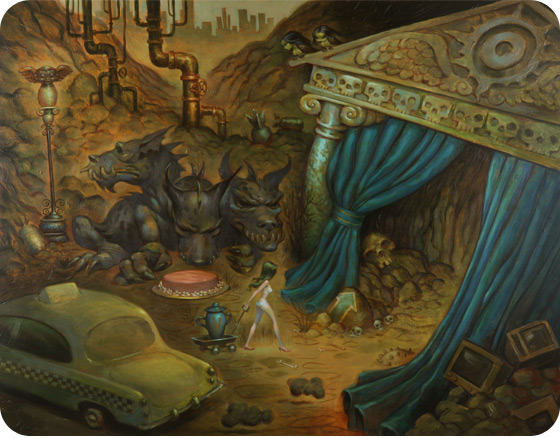
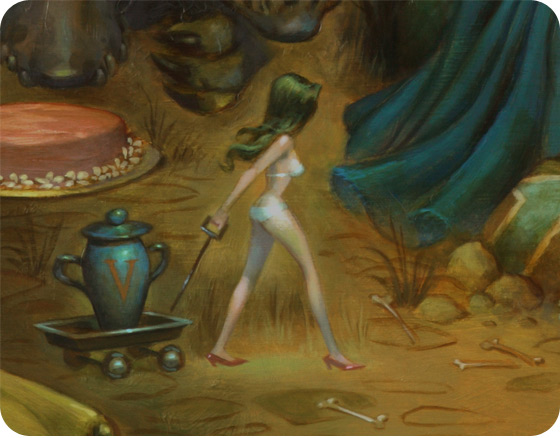
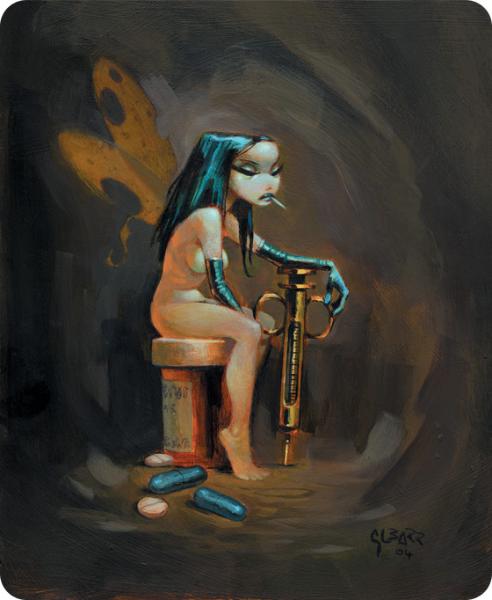
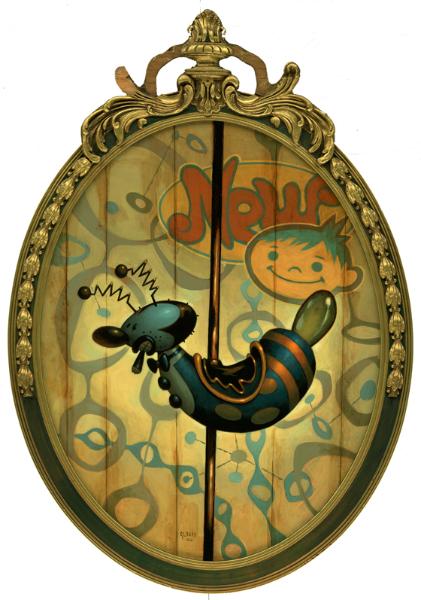
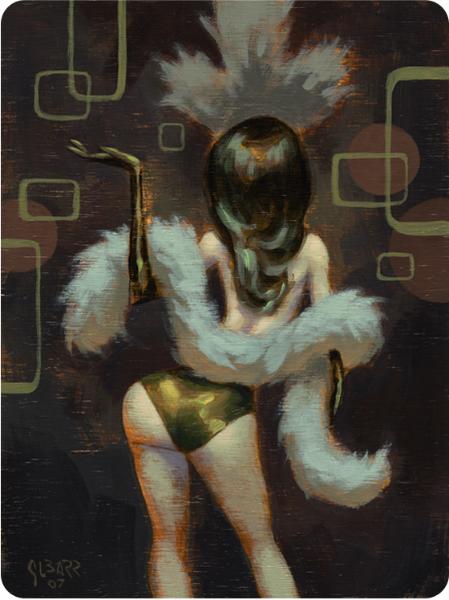
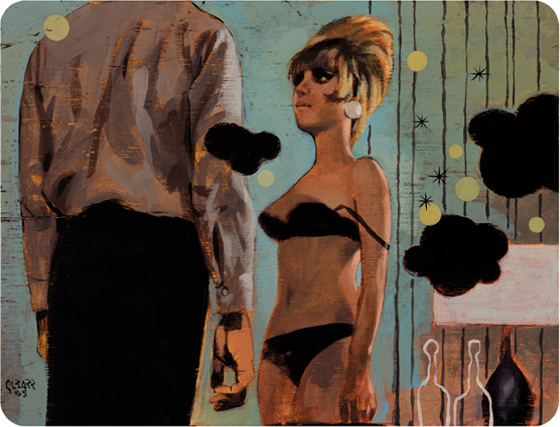
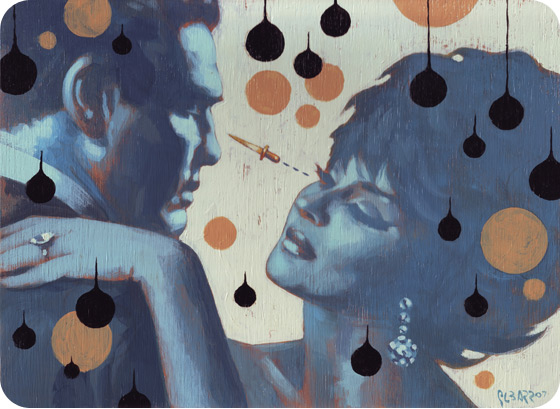
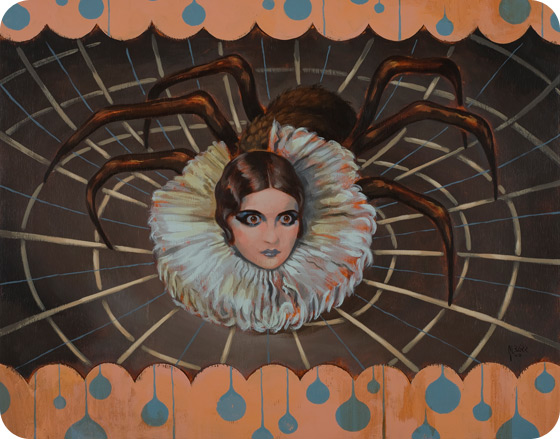
| When Glenn Barr conceived his latest publication Haunted World, he inadvertently laid out in book format, a peepshow into his brain of 47 years. Barr, who has been brandishing his mark, albeit somewhat unconventionally, on the art world for much of the past two decades, has often accounted for his development and influences in simple terms. But at such close range, the complexities and idiosyncrasies are difficult to reveal. Although many individuals and opportunities have contributed to the mix over the years, Barr like most other post-World War II Americans of his generation amassed life experience through not only television, but film, as well as a plethora of pulp publications, rock and roll, and in his case, the shadow of the Motor City. Channeling the likes of Grayson Hall and Ed “Big Daddy Roth” - to name just a few -, in combination with the de-evolution of Detroit and its ear thrashing music, he found inspirational fodder for his art. Barr assimilates it all synthesizing mass media, subculture, urban blight, and fantasy into the spectacle that comprises his visual art. But how did all this come to manifest the paintings, printed works, and other ephemera associated with Glenn Barr? Although he currently occupies a studio on Detroit’s desolate and largely unoccupied Michigan Avenue in the heart of a once Irish working-class neighborhood known as “Corktown,” Glenn Leroy Barr, Jr. was born in the sleepy white-bred suburb of Livonia, Michigan, just west of Detroit in 1958. When he wasn’t foraging through popular culture as a kid, Barr drew, painted, and played guitar in a band. His aptitude for art was clear to his high school mates, and he received his earliest “commissions” from his peers. Working in felt-tip or ballpoint pen and ink, he rendered true-to-life depictions of their favorite rock stars on t-shirts, jean jackets, and the covers of spiral bound notebooks. And to the artist’s great dismay, his masterpieces were sometimes hurled at performers during rock shows. When a t-shirt with a drawing of Kiss frontman Paul Stanley made it onstage at a Detroit concert at Cobo Hall in 1976, the singer was so impressed with its virtuosity, that Barr was summoned backstage to meet the band. But the chance meeting with Kiss was also a boon to Barr’s alter ego as a rock musician as well as an artist. Throughout high school and thereafter, he played in several bands. In addition to his talents as lead singer/guitar player, he doubled as an ad-hoc promoter and freelance pro-bono artist providing the artwork and graphics on promotional handbills and flyers that he would plaster around town. It was just the beginning of a long-term relationship between his art and the music world that would evolve and into album and DVD covers for The 3-D Invisibles, Speedball, The Detroit Cobras, and The Witches. In 1995, his work in this genre would culminate with cover art for the compilation recording Saturday Morning Cartoons, where he created a twisted caricature featuring an eerily greenish living room of strung out children mesmerized by the boob tube - a testament to Barr’s own fixation and never-ending addiction to cartoons and the world of animation. But Detroit, essentially a small town with a large and incredible legacy for popular music from Motown to techno to garage, saw Barr mostly in the right place at the right time, evolving a style grounded in pulp illustration and cartooning that could easily epitomize what was essential about the underground zeitgeist of Detroit. Moving seamlessly through the tightly knit social circle that revolved around the city’s music scene, Barr was introduced to Detroit’s legendary graphic designer Gary Grimshaw in the late 1970s. Grimshaw, who is known for his psychedelic, art nouveaux-inspired rock posters from the late 1960s, saw the young artist as a diamond in the rough and introduced him to Creem magazine’s art director Charlie Auringer, who included his work in several issues of the now defunct magazine. The staff at Creem had long been sympathizers and co-conspirators in the process of indoctrinating America’s youth to the counter culture excesses of sex, drugs, and rock and roll. Although Barr’s contributions were few and likely went unnoticed, his inclusion in the publication would link him to the likes of America’s most famous underground artist Robert Crumb, who Creem had recruited to design its “Boy Howdy” logo at the magazine’s inception in the 1969. The early eighties brought on few freelance jobs for paltry pay, and Barr supported himself with odd jobs in business sectors as strange as fast food restaurants, a garage door opener company, and a small electronics factory. He got serious about painting and enrolled in classes at a local art school in Detroit around 1981. After four years of study, he got an entry-level position at a commercial illustration house, but soon found the prospect of being “just a wrist” at the studio less than challenging. Spewing out art that was clearly just product and sensing the overwhelming mediocrity of the situation led Barr to the conclusion that commercial work was not his calling. He soon quit and co-founded an art space informally known as Studio X with friend and fellow artist Dave Higgins around 1988. Renting a cheap, small office space in Royal Oak, a suburb just north of Detroit, the Higgins and Barr atelier was a place where they could share an affinity for comics, the Cramps, Hammer Studio vampire movies, and toy collecting. Eventually they asked B.K. Taylor to join their studio. Taylor was an artist and writer best known for his work “The Appletons” in National Lampoon. As his studio mates eventually moved out and on to other ventures, Barr was alone to whatever steady work he could drum up from comics, the occasional rock poster, and ads and illustrations for local weekly’s and underground magazines. In the late 1980s, Royal Oak was a train stop town notorious for its hobos, seedy flophouses, and an unassuming two-block downtown area of shop fronts. Its unlikely ambience lured young business entrepreneurs who readily primed the neighborhood for re-gentrification. The area became Barr’s business and home base where he lived with his wife Nancy for nearly ten years. His studio was among other out-of- the-mainstream businesses including vintage clothing boutiques, the local bondage shop, unaffected bars with cheap drinks, and the Detroit area’s most coveted pulp emporium Dave’s Comics. Perhaps Barr’s most influential and supportive patron so-to-speak was the store’s owner, Detroit’s most notorious and lovable comic book pimp and vintage toy connoisseur Dave Huxley. Before the term retro culture became buzzword for HGTV decorators and EBay a household name driving up the prices of resale collectables, Huxley understood what was precious about underground and pop culture and had a consummate knowledge of its history. He amassed a home and warehouse filled with treasures including rare comic back issues, vintage lunch boxes, peddle cars, and mint mid-century toys and figurines - just a few of his many collecting obsessions. When he begat Dave’s Comics in the late 1980s, the store became a mecca for locals who shared his passion. Just down the street from Barr’s studio, weekly visits to the store and conversations with Huxley steeped Barr’s passion for underground culture and fed his early addiction to comics, books, vintage toys, and other ephemera. Huxley also asked Barr to create regular advertisements for his store (figure - Dave’s Comic Ads). Barr crafted a hand-scripted voluptuous concept for the store’s logo that accompanied illustrations executed in black-and-white ink. These small-scale gems were the proving ground for a developing visual vocabulary that featured the likes of oversexed vamps with bulging machine guns, twisted midget scientists with their gigantic pet gorillas, along with the affects of car culture and the familiar backdrop urban blight. The ads appeared regularly in the Detroit area bi-weekly magazine known as Fun and in its later incarnation Orbit, which were the brainchildren of publisher Jerry “Vile” Peterson. Barr and Peterson, former front man for the notorious musical act known as The Boners, had gone back years and knew each other from Detroit’s bygone punk era. Peterson’s great love of local gossip and scandal (whether it be true or slightly embellished by his own pen), the gritty club scene, and miscellaneous city lore made for the finest nothing-is-sacred rag Detroit had ever seen. With a talent for publishing that was grounded in irreverence, punk nihilism, yellow journalism, and sheer slander (incidentally the later term became the name of his weekly column), Peterson transgressed the typical hippie, liberal format that characterized other city weekly’s in Detroit and elsewhere in the country. He created a paper that everyone wanted to read for the sheer sake of entertainment as well as insider scoop about the city’s cheapest watering holes, sex spectacles, and must-see musical acts with notable features on whatever sub-cultural themes he deemed suitable for his readership. When he needed to give his paper the appropriate visual allure, he asked Barr to contribute art for the covers with full reign over creative input. The resulting imagery varied from the surreal to the sensuous. The late 1980s and early 1990s, Dave’s Comics was the supreme gathering place for the usual freaks, geeks, and nerds associated with the trade, but artists, musicians, and writers also found their way to the store – although the distinction between the former and the later was sometimes difficult to discern. Filmmaker and caustic critic Chris Gore peddled issues of his homemade zine Film Threat to anyone who approached the cash register. Gore, revolted by mainstream Hollywood films, exalted the work of New York underground directors Richard Kern and Nick Zedd and paid homage to the likes of John Waters and Jack Hill. A film fanatic in his own right, Barr soon struck up a friendship with him. When the magazine grew from a basement hobby to a full-fledged periodical, Barr executed a string of cover and feature illustrations for the publication and caricatured the likes of subversive film personas like the infamous Tracey Lords (figures Film Threat covers) Through Huxley, Barr also met artist and independent publishing entrepreneur Greg Theakston, a native Detroiter, who lived in New York City. Theakston frequently returned to Detroit to tend to his printing press and mingle with the primitives, while he organized the occasional comic convention or drummed up support for his fledgling fanzine The Betty Pages. Theakston recruited Barr for small illustrations for his zine. Eventually, Barr would join him in New York to work on various projects. During these trips Barr met editors, artists, and writers familiar to the world of comics and animation. Work in the comic biz seemed like a natural fit for Barr and a series of projects followed. In the early 1990s, his first publication Mars on Earth appeared in a newly developed format – the graphic novel – and was followed by the four-volume Brooklyn Dreams. Through Theakston, Barr also met artist Bill Wray, who eventually asked him to Los Angeles to work on an animation project. Barr joined him taking on an eight-month stint working for twisted genius John Kristafaluci at his animation house known as Spumco. The company was responsible for spawning The Ren and Stimpy Show. With Wray, Barr learned the ropes of designing color schemes and backgrounds and much of Barr’s handiwork and stunning “glory panels” appear in the cartoon’s second season. But the foreboding sunny skies, smog, and vapid culture of southern Californian life left Barr uninspired. He returned to the gritty and unglorified familiarity of Detroit in 1993. Settling into a comfortable bungalow in a blue-collar suburb barely north of Detroit’s Eight Mile Road border, Barr returned to Michigan and continued to work on graphic novels and animation projects, as well as series of early paintings. On weekends, he frequented Midwest comic cons appearing with original art for sale. To his surprise, he often left empty handed, as a collectors’ market for original work by animators, comic artists, and illustrators was developing. A few Detroit area galleries were quick to follow the trend. One of the earliest, the short-lived Cement Space, opened in an old downtown Detroit warehouse around 1994. Showing work by local young artists and out-of-towners such as Mark Mothersbaugh, Cement Space introduced a fresh aesthetic to the Detroit area that was informed by mass media, pop culture, and design. The gallery offered Motorbooty artist/publisher Mark Dansey and Barr their first exhibition. Barr included new paintings and original art from his Dave’s Comics ads and Orbit magazine covers. Later a string of successful solo and joint exhibitions at CPop Gallery organized by the visionary director and rock poster aficionado Rick Manore followed. Barr’s work developed along themes of the fantastic and the real with references to science fiction, the usual urban blight, glimpses into Detroit’s infamous back alley strip joints, along with an occasional nod to Black exploitation films of the 1970s. Barr’s talents soon spread to other galleries outside of Detroit, most notably with his first West Coast exhibition at Billy Shire’s Hollywood gallery and collectibles emporium La Luz de Jesus in 2001. By the turn of the millennium, it was evident that painting would be occupying most of Barr’s professional life and personal time (although he took time out for the birth of his daughter in 2001). He had outgrown his cramped Royal Oak studio digs and moved into a loft space converted from an old brush factory on Detroit’s Michigan Avenue. The street was once a major east/west thoroughfare, but decline and diminished traffic after the city’s largest train station and old ballpark were closed. The neighborhood architecture and local color, or lack there of, and an interest in ancient mythology and the carnivalesque appear to have influenced Barr’s paintings in recent years. Working with artist and designer Brad Keech and his Denver-based Pressure Printing, Barr released a series of prints entitled Carnival of Souls. The imagery, drawn from a painting of the same title, involves the stations of a merry-go-round complete with grotesque and whimsical beings including a sumptuous mermaid with a well-endowed derrière and a cigar-smoking jitterbug in full hobo regalia. While this essay was being written and the design and publication of Haunted World was in progress, Barr was immersed in a new series of works including his largest painting thus far – a five by eight foot spectacle comprising a fantastic world in panoramic view. In it he splices together some of his favorite themes from the past and present including the usual femmes fatales and decrepit buildings found within the setting of a carnival funhouse Does the tale of Glenn Barr’s haunted world end here? Unlikely. The artist is never at a loss for ideas, and his bulging sketchbooks contain evidence of the masterpieces that will evolve in the future. But he still takes the time to revisit lost loves, helping out local rock bands – a CD cover for The Sirens is currently in the works, as are designs for an up-and-coming line of vinyl art. And there’s always the many unending diversions that feed his imagination – another abandoned building, a newly-found kewpie doll to add to his collection, yet-to-be discovered films and music, and of course television. Lurking behind the doors of a 150 year-old Chinese armoire that has permanently taken root in his front room, the infernal device continues to mesmerize the artist, feeding his head with visions of the mundane and the sublime. J.J. Marcucci |
| Glenn Barr |


| The Ruiners |
| Summer |
| Hera and the New World |
| Fashionable Wrath |
| Gypsy and the Phantom Betrayal |
| Mission from Venus |
| Mission from Venus- Detail |
| Happiness |
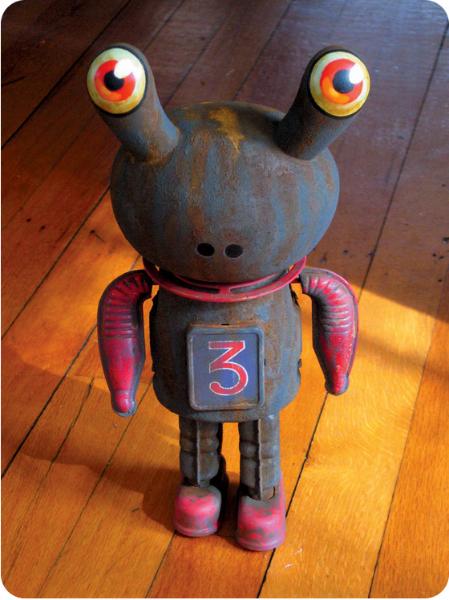
| Maroon 3 |
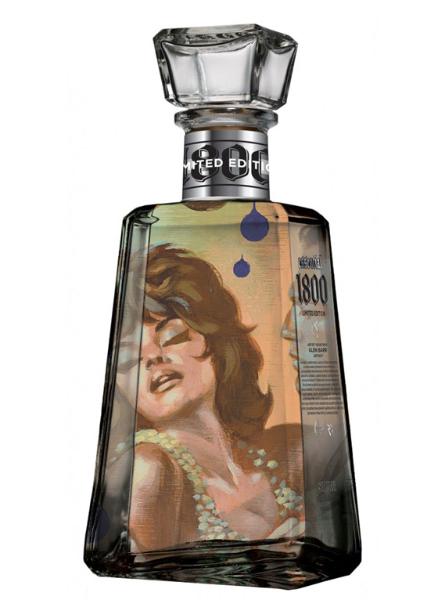
| 1800 Tequila - Artist Edition |
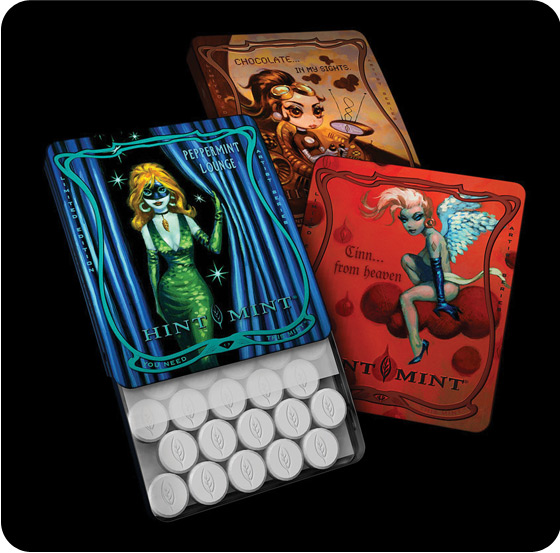
| Hint Mint Tins |
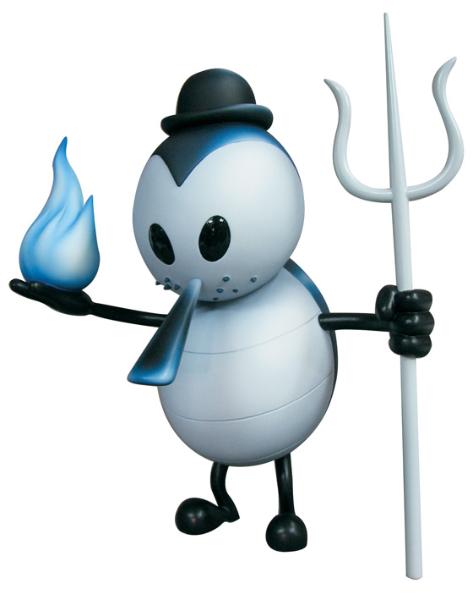
| Hell's Proprietor - Blue Edition 500 |
| Jockey Full of Bourbon |
| Oceanid |
| BOA |
| Heart Aflame |
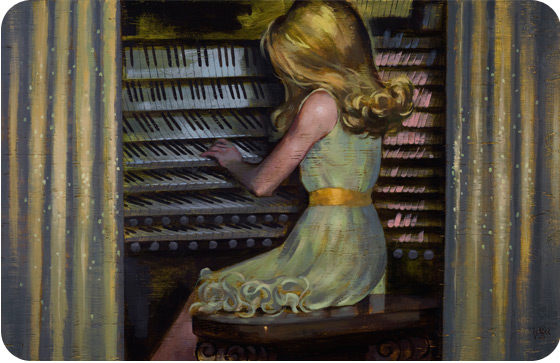
| Enchanted Melody |
| Fuego |
| Samone |